Eco-friendly Sustainable House
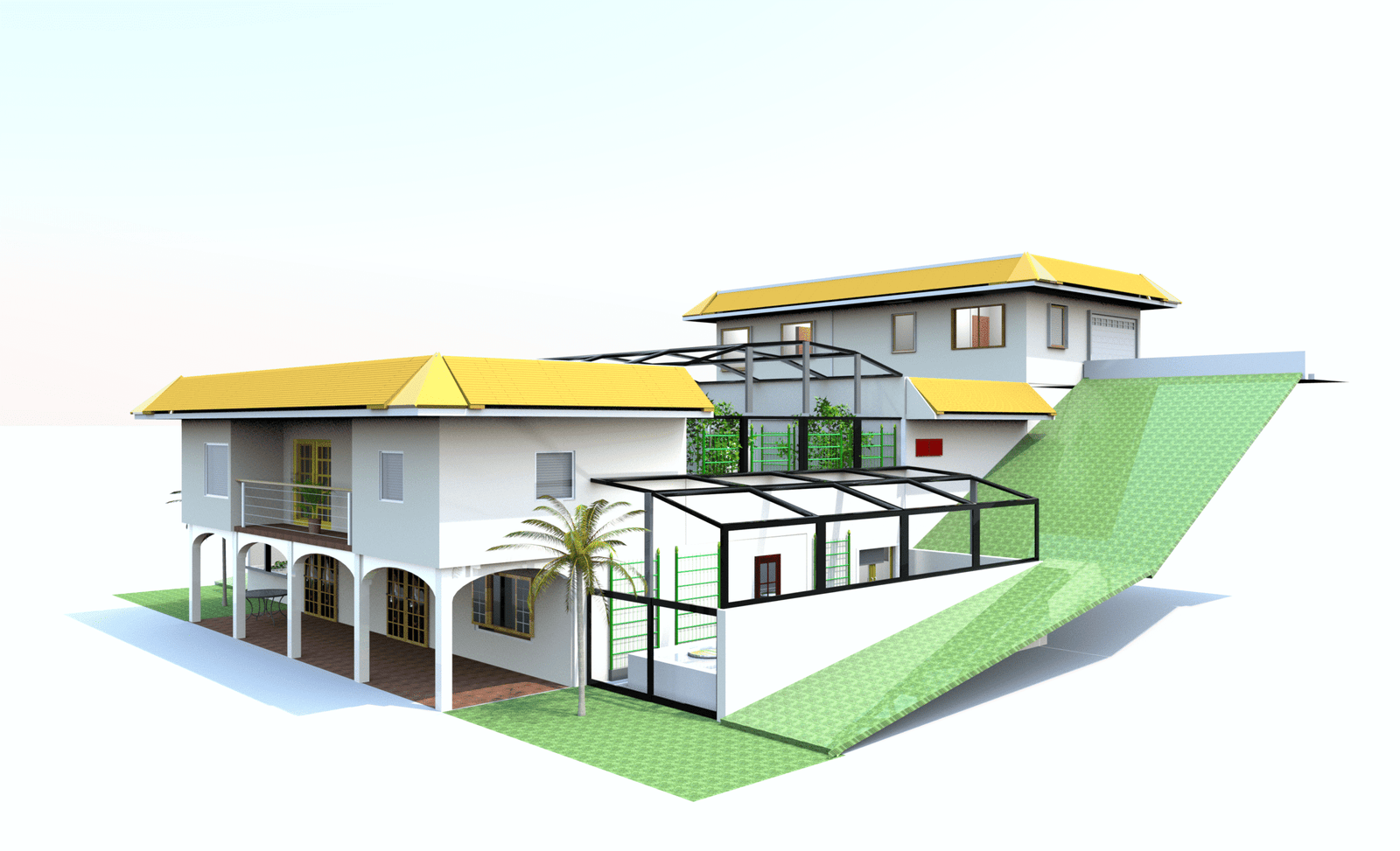
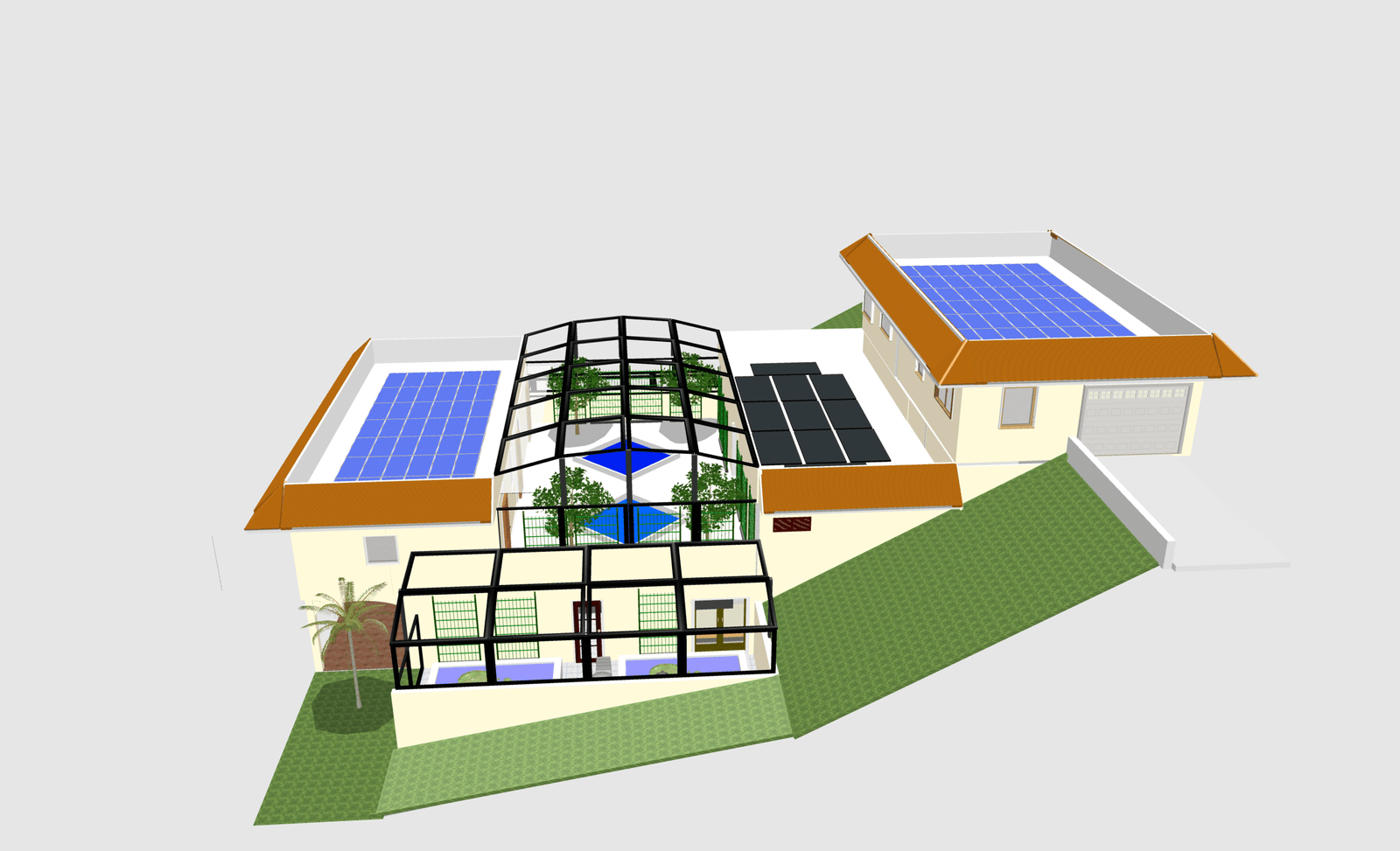
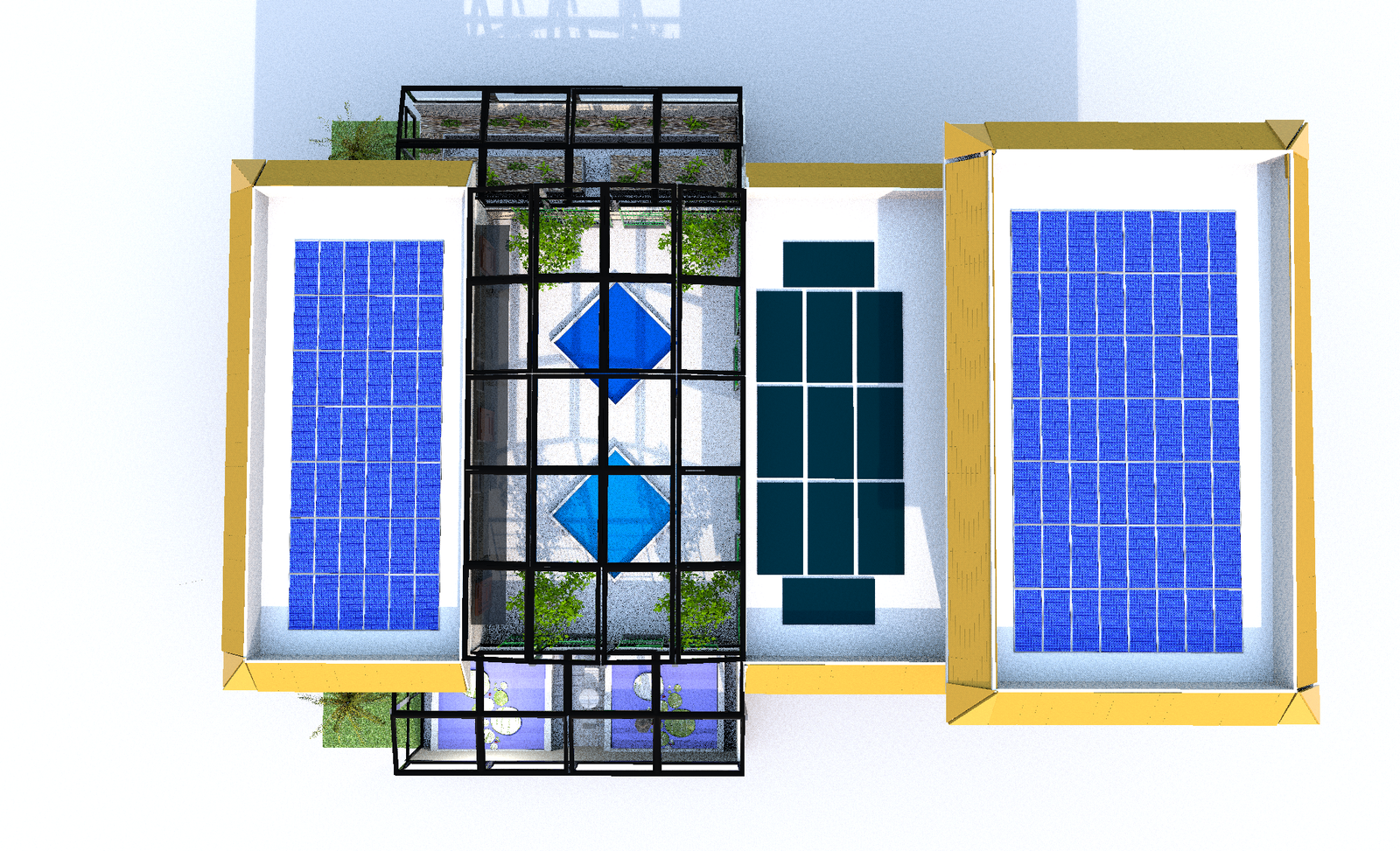
The primary goal in designing this house was to have it be ecologically sustainable over long periods of time, including both its construction and the consumables over its lifetime. It is totally off-grid, and is self-sufficient in terms of electricity, heating, cooling, and water within a tropical climate. Low-maintenance was another goal and all subsystems have a projected lifespan of 30 years, and in some cases 50 years. Severe damage to the house due to weather would negate any sustainability advantages so it is designed to withstand Category 5 hurricane winds. .Notable design features include dual 3000 gallon aquariums, which bring natural light into the lower level of the house, and a large aquaponics setup, which allows for the onsite production of a wide variety of food crops. Indeed, if the occupants are mostly vegetarian, there will be little need to go to the grocery regularly.
In this essay, I shall go over the design in more detail, and point out more subtle elements.

INTENDED SITE AND USAGE
This house is designed to be oceanfront and to provide good views over the ocean from most major rooms. It is most suited for a western shore located at a low latitude in the tropics. It was specifically designed for the western coast of Carriacou in Grenada. There is a nearly separate owner’s or caretaker’s apartment on the third floor so that the house can be rented to guests while the owner remains in residence.
STRUCTURAL CONSIDERATIONS
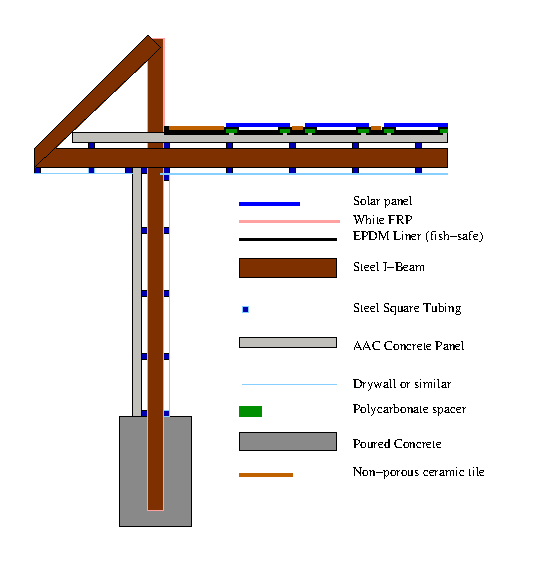
We want the house to be strong enough to withstand most natural disasters including hurricanes and earthquakes. We design for Category 5 hurricanes and earthquakes of Richter 8. We do not design for tornadoes or tsunamis. The major way we reinforce the structure is by incorporation of diagonal braces. This use of large steel triangles, together with use of low mass aerated autoclaved concrete (AAC) panels results in a very sturdy structure.
ELECTRICAL
Power from the solar cells is stored in a large battery, an Edison nickel-iron type for longevity’, of roughly 1000 Ah capacity at 96V DC. It is then converted to 120V AC for distribution around the house.
WATER
Several rooms on the hillside are dedicated to watet storage, holding in total about 40000 gallons. Rainfall during the rainy season is collected from all roof surfaces and stored in the EPDM lined reservoirs for use during the dry season
HEATING
All heating is accomplished by heating water in rooftop panels that transfer the sun’s energy into a large reservoir of hot water kept at 80-90 degrees Celsius (i.e., very hot). This water is never used directly, but only to heat other water or air by means of heat exchangers. The hot water faucets in the kitchens and bathrooms are on a recirculation loop so that 49 degree Celsius hot water is almost instantly available. Normally, running such recirculating systems is highly energy inefficient and avoided, but here water for heating is a relatively abundant resource, and we take advantage of that.
The air heating needs of this house are expected to be minimal, given its tropical location, but air heating can be done by passing the air over a coil of 90 Celsius water. We want the system to be functional for about 10 days in the absence of solar input, so the heat capacity must be sufficient to allow for 100 showers (0.1 KWh each), 10 dishwasher loads (1 KWh each), 10 laundry loads (1 KWh each), and 100000 BTUs for heating (30 KWh), totaling 60 KWh thermal energy. This equals 216 megajoules, which requires a reservoir of about 5 million grams of water, or about 5000 liters, or 1400 gallons, a reasonable amount. A schematic of the system is shown below.
REFRIGERATION
Refrigeration is accomplished by parallel use of Peltier devices. Although often considered very inefficient, careful inspection of the data sheets from tetech.com reveal they are not that inefficient at a hot-cold differential of 10 degrees Celsius, and are noiseless, and have a service life of 30 years.
The plan was to have thermal reservoirs at -20, 0, 10, and 20 degrees Celsius. These would convectively chill the refrigerator and freezer compartments in the kitchen, the room below.
AQUAPONICS SETUP
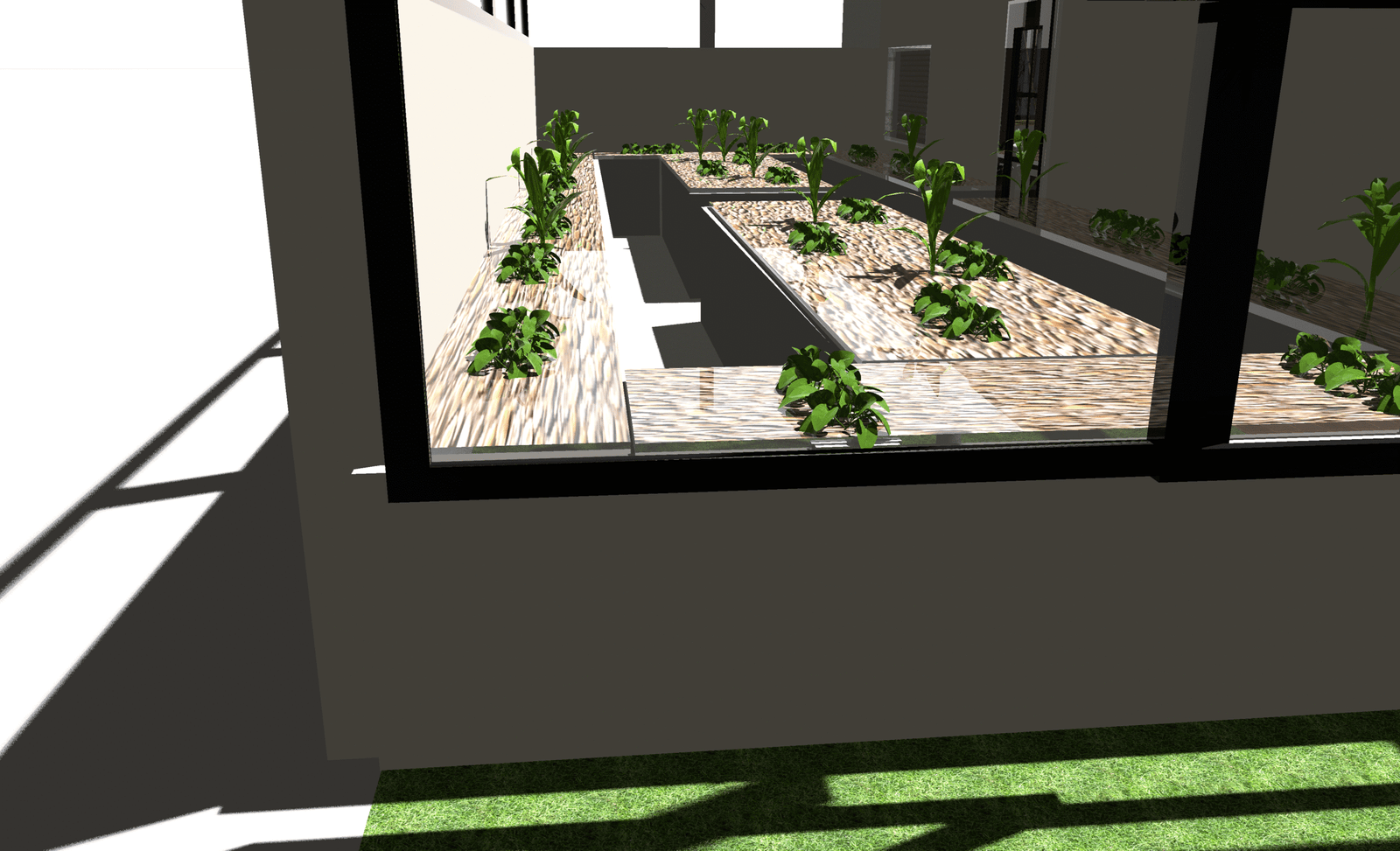
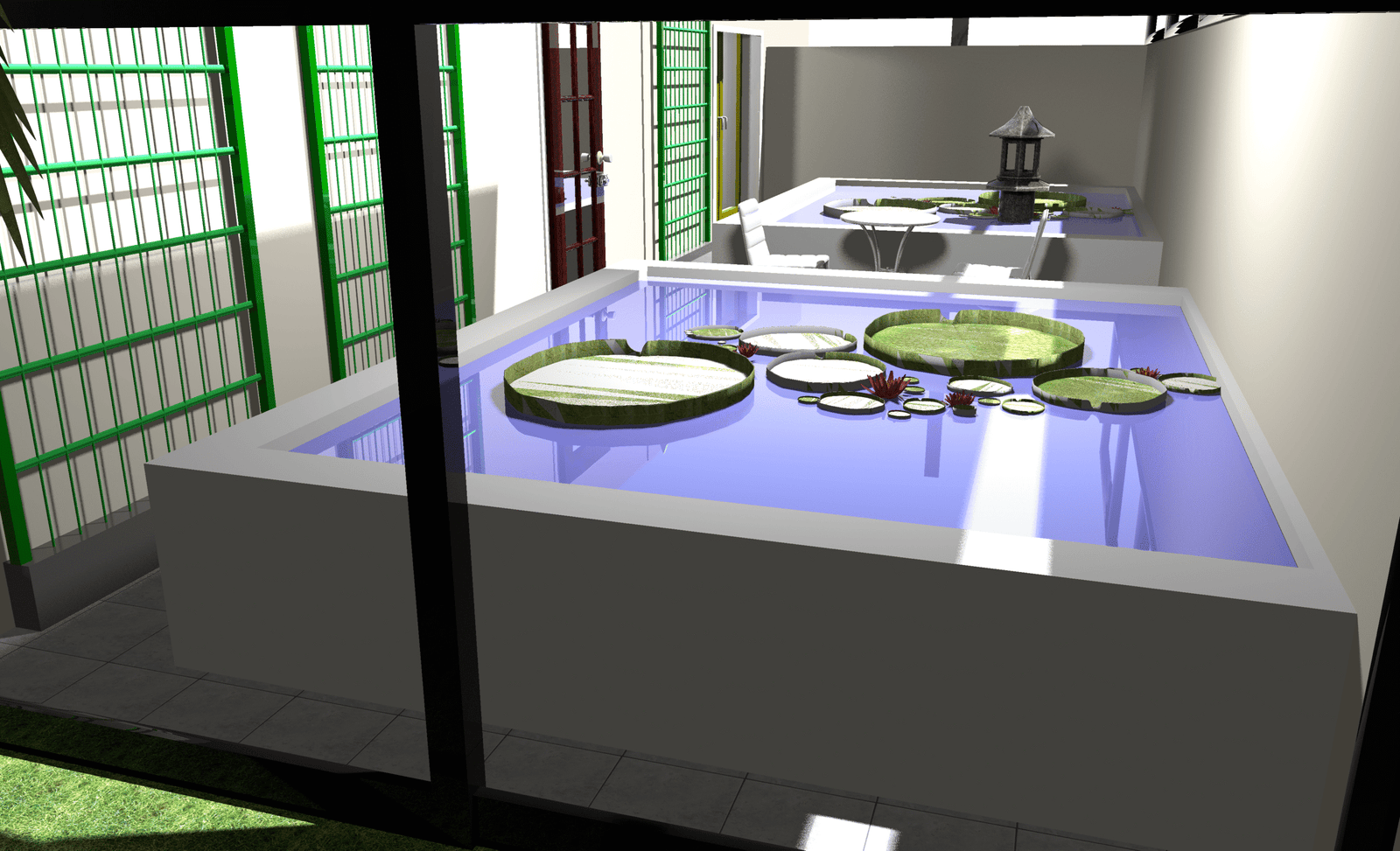
The water lily/koi ponds to the south of the house are tied together wih the vegetable growing beds to the north of the house to form a complete aquaponics setup. These form a zoned ebb/flow system, where a certain subset of beds are flooded at the same time. This avoids large variations in the water level in the lily ponds. The trellises by the lily ponds may be used for ornamental vines such as Thunbergia mysorensis, Thunbergia grandiflora, Ipomoea sp. (including the moonvine, formerly Calonyction aculeatum).
AQUARIUMS
Each aquarium is roughly 3000 gallons, one freshwater and one saltwater. Each uses 4 4×8 acrylic panels 1.5 inches thick. The structural aspects are separated from the waterproofing aspects. The liner consists of transparent PE 1/8x48x96 bonded to EPDM using an advanced adhesive such as Bondit B45.


ORNAMENTAL GARDEN
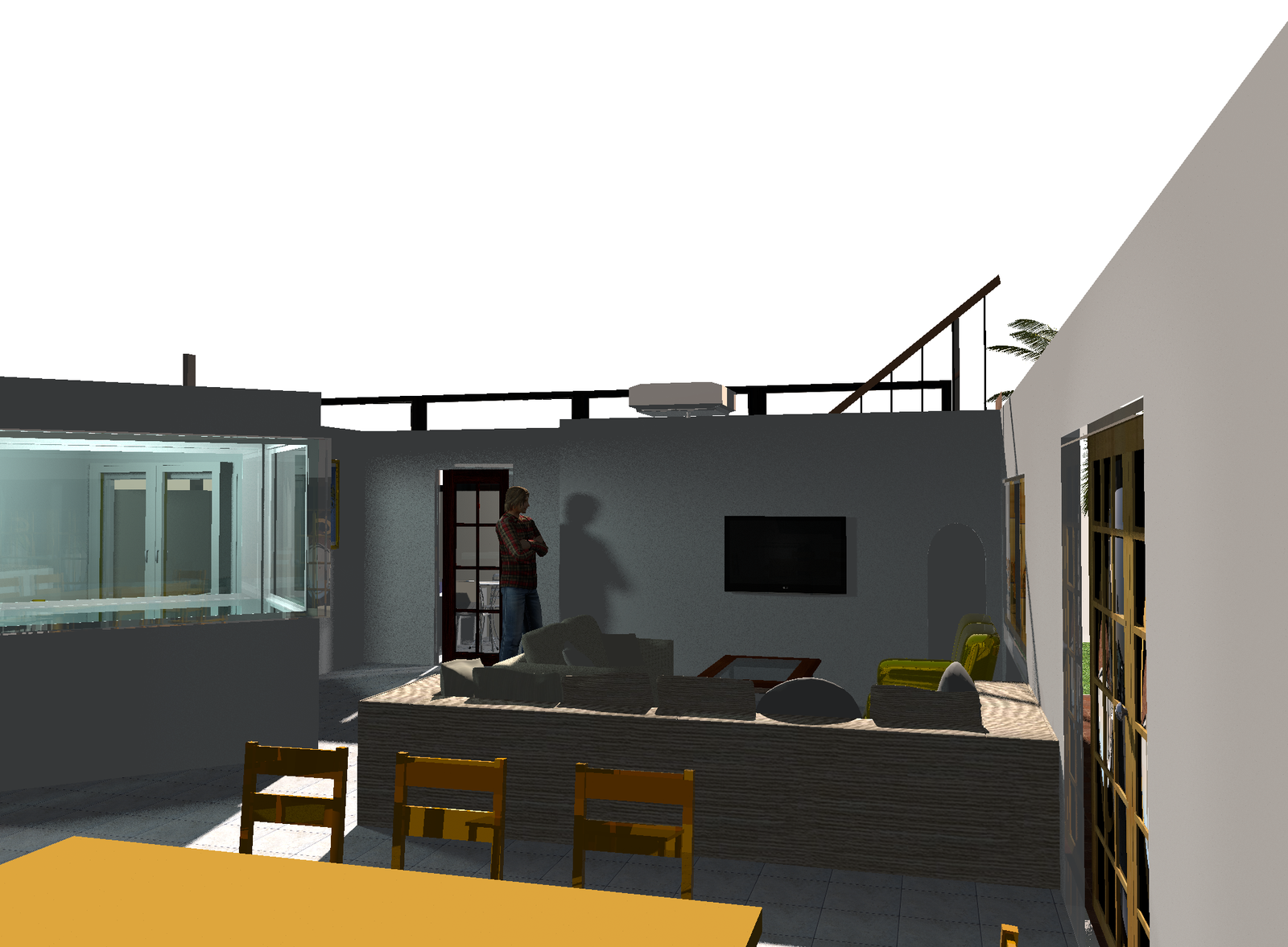
The ornamental garden consists primarily of epiphytes including orchids, bromeliads, ferns, and aroids. Supporting trees include those which develop corkey bark at a young age such as Acnistus arborescens.
