The Solar Greenhouse
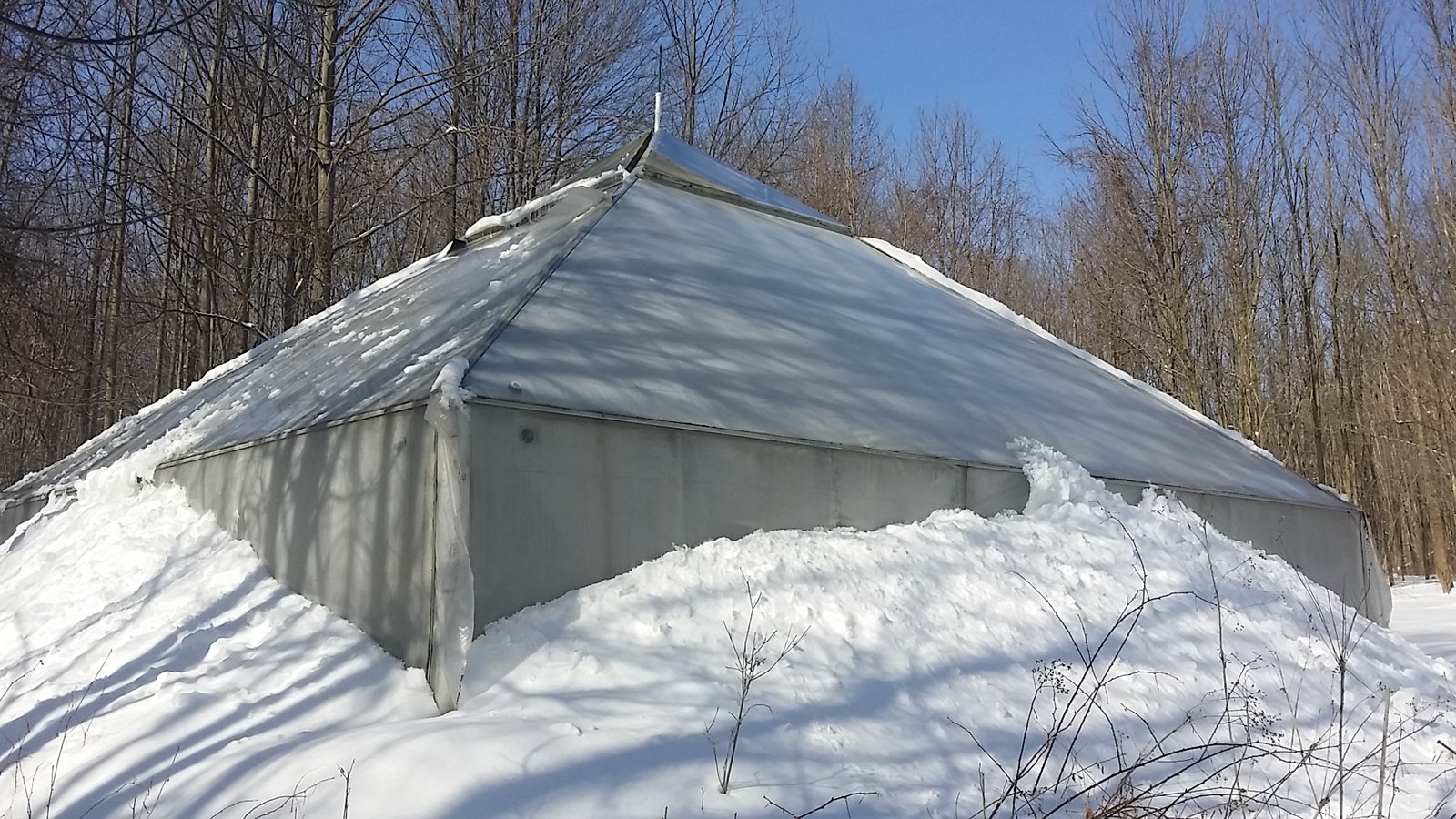
One goal in designing a greenhouse is to reduce the energy consumption during the winter. Computer simulations showed that with sufficient thermal mass inside, it might be possible to retain enough heat in Ohio to last an entire winter. The basic design was for a pyramidal-shaped pit greenhouse with corners oriented in the cardinal directions. Thr southeast and southwest sides would be translucent to allow capture of scarce winter light, while the northeast snd northwest sides were constrcted of opaque, highly insulating materials. Since water has such a high specific heat, I initially planned to flood the bottom with ~35000 gallons of water. To accommodate this much water, the pit would be nearly full. The dimensions of the greenhouse were 32×33 feet and about 18 feet high. The pit was about 6 feet deep, making the peak about 24 feet above the bottom of the pit. A single door was installed on the northeast side near the north corner.
The simulations assumed that the surrounding soil was relatively dry. Excavation of the pit revealed a spring at the eastern corner of the pit. This would have a dramatic effect on the predicted thermal performance. A constant influx of near-freezing water would carry off a large fraction of the retained heat. The logististics of keeping that much water in the pit were problematic as well. Among other issues was a safety concern if anyone or anything fell into the water. For those reasons, it was decided to not fill the pit with water, and to instead have about a 1000 gallons of water in aboveground tanks within the pit.

The true test of a greenhouse comes in the wintertime. The sides and lower roof were constructed of inflated polyethylene film. The upper roof was constructed of polycarbonate panels. The pitch of the roof is fairly steep, roughly 10 inches of rise per 12 inches of run, so as to shed snow and prevent it from building up. The shed snow piles up around the walls and foundation, helping to insulate it against prolonged cold weather, as you can see in these two photos:

The greenhouse was ideal for growing subtropical plants which could tolerate temperatures down to about freezing. I later added a small “greenhouse within a greenhouse” for plants that needed a little more warmth. At 50 degrees a 500-1500 watt heater would come on within the tropical area. At 35 degrees a couple of 1500 watt electric heaters came on in the main greenhouse. On especially cold nights (those with subzero outside temperatures, windy conditions, and minimal snowfall), I manually lit a convection propane heater of about 50000 BTUs to augment the other heaters. Depending on the winter, I used between zero and six 20lb tanks of propane.
The plants were taken outdoors from late spring to early fall. During this time the door was left open to provide some air circulation and prevent excessively high temperatures from developing inside. Temperatures typically peaked around 100 degrees Fahrenheit. The exposed earth and water also kept it from overheating.
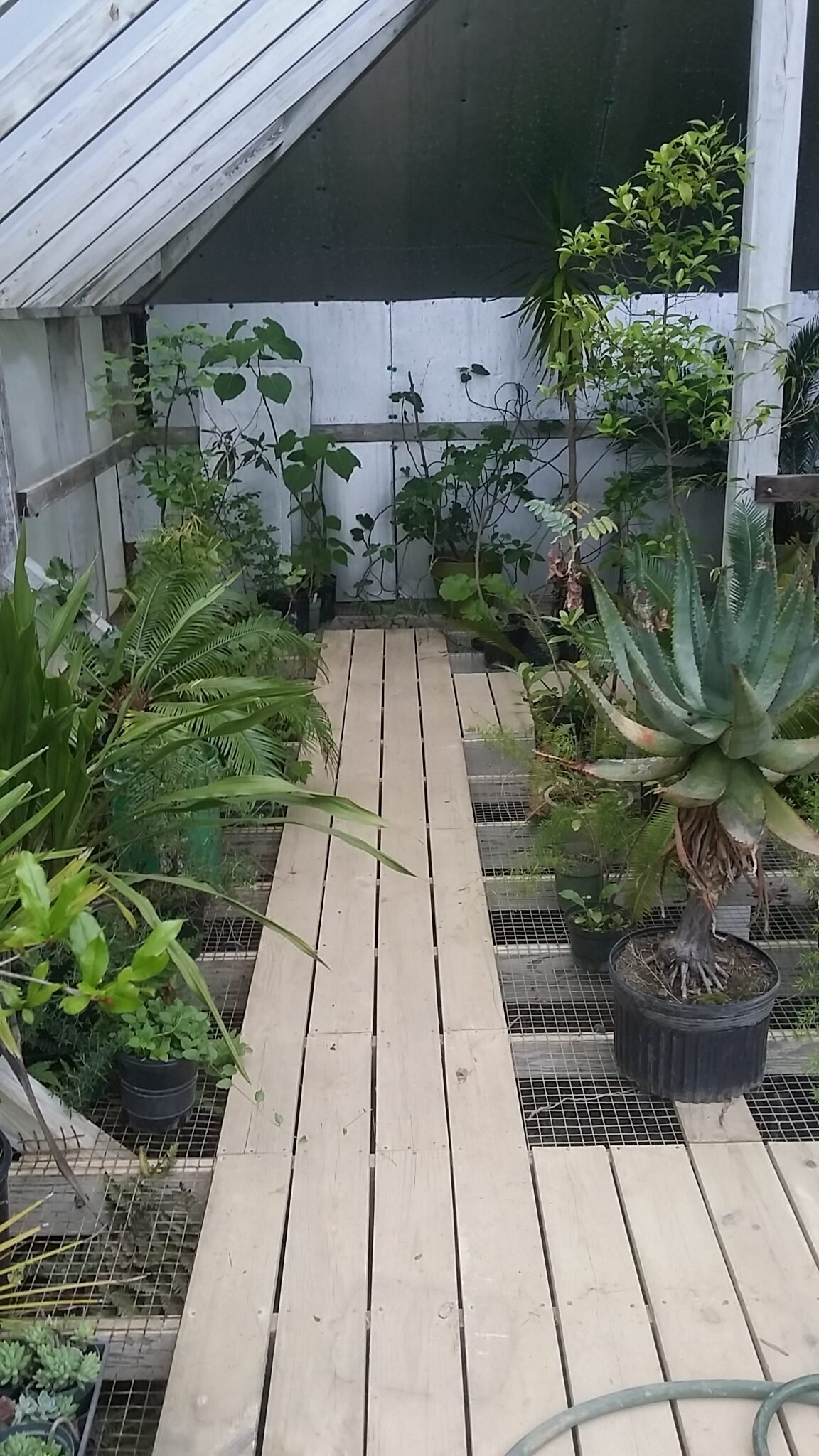
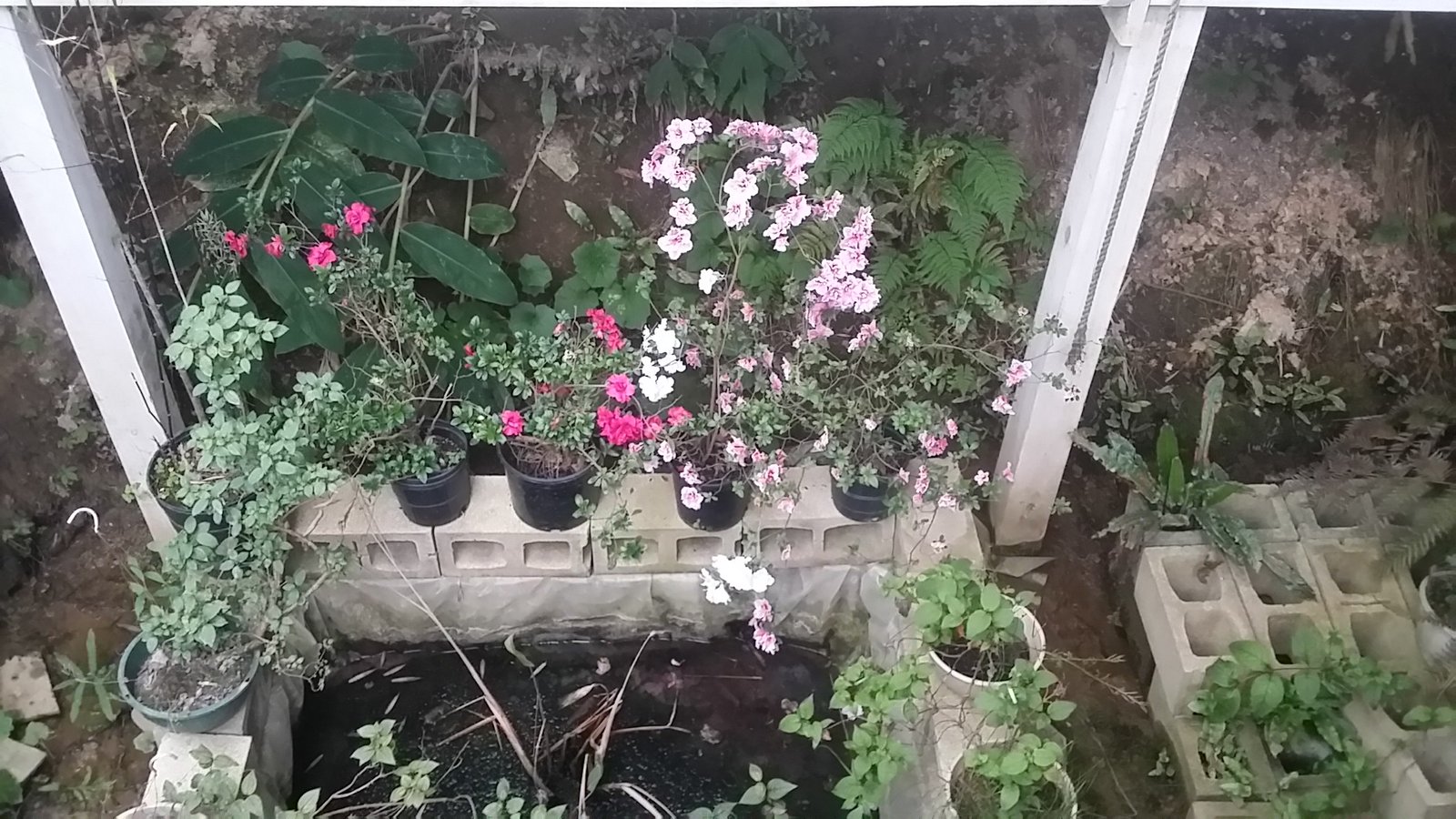
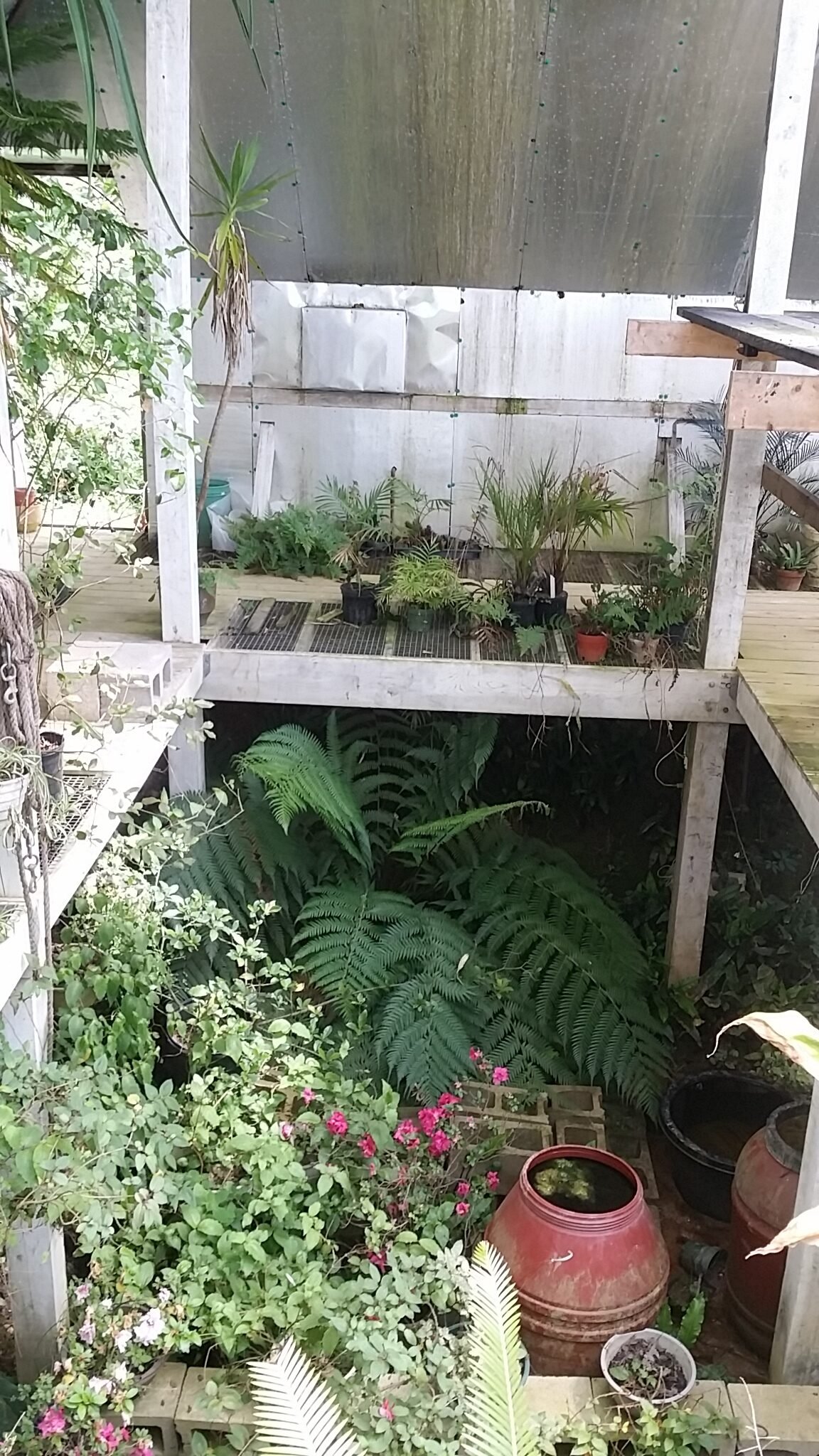
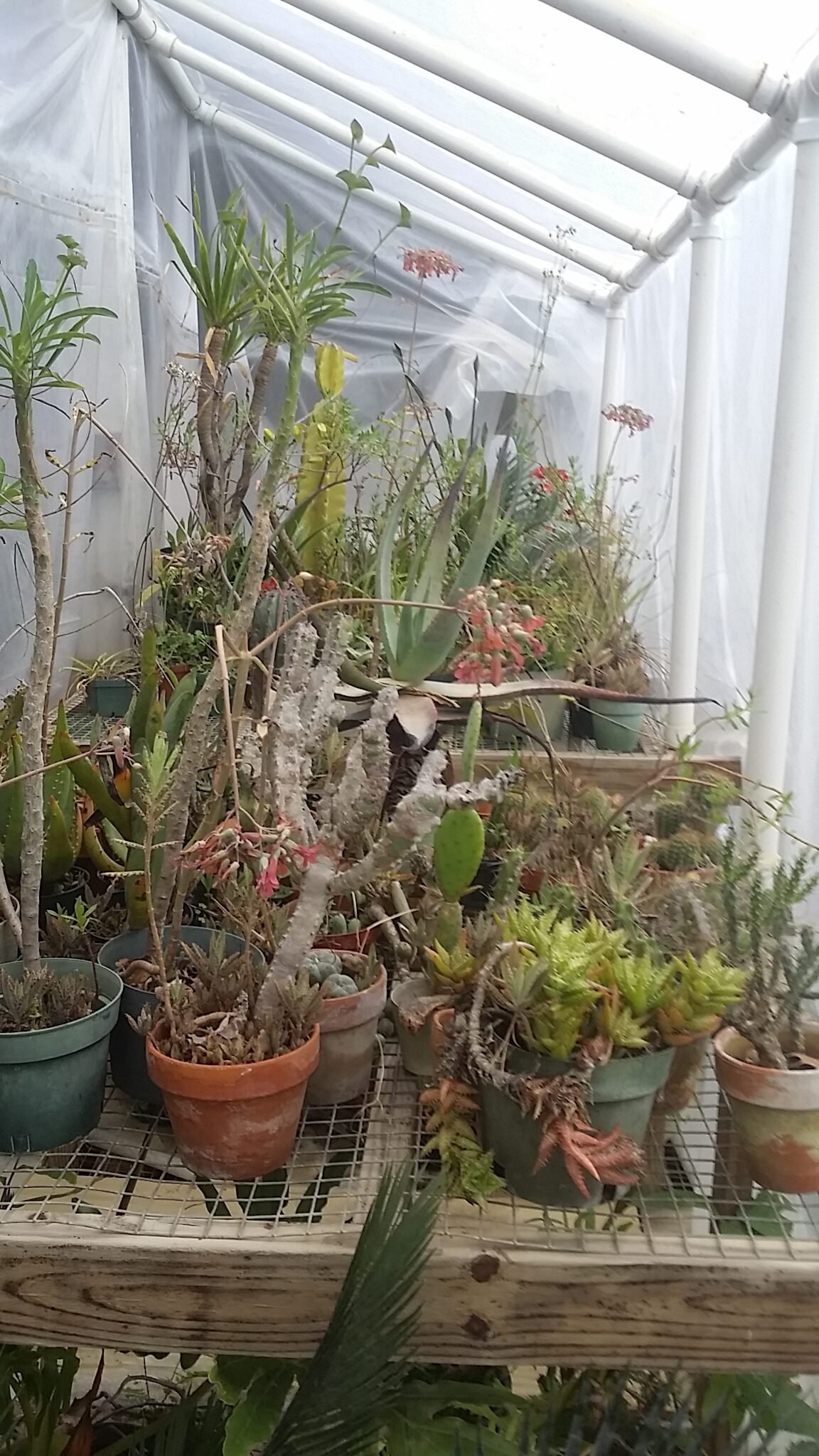
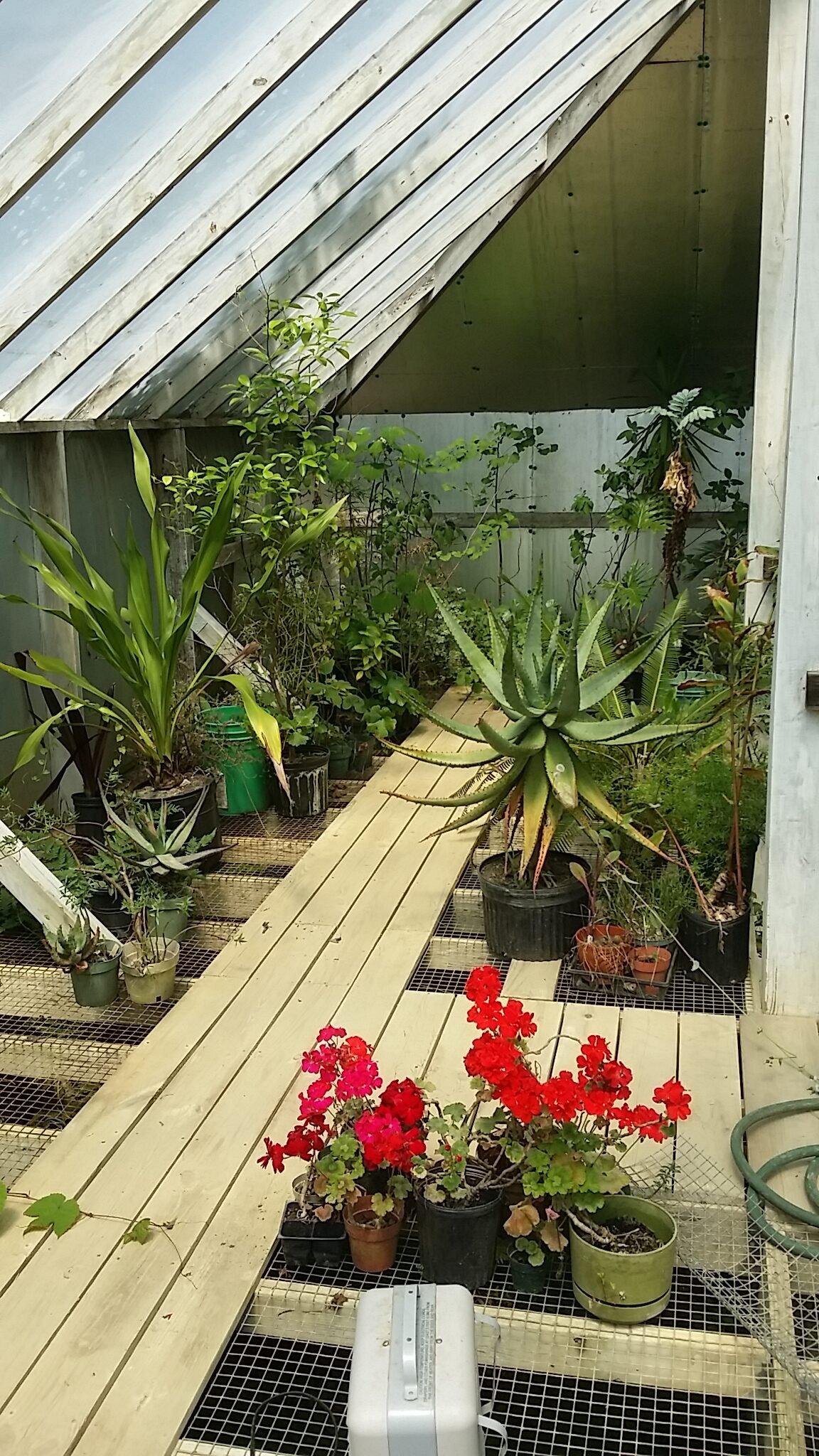
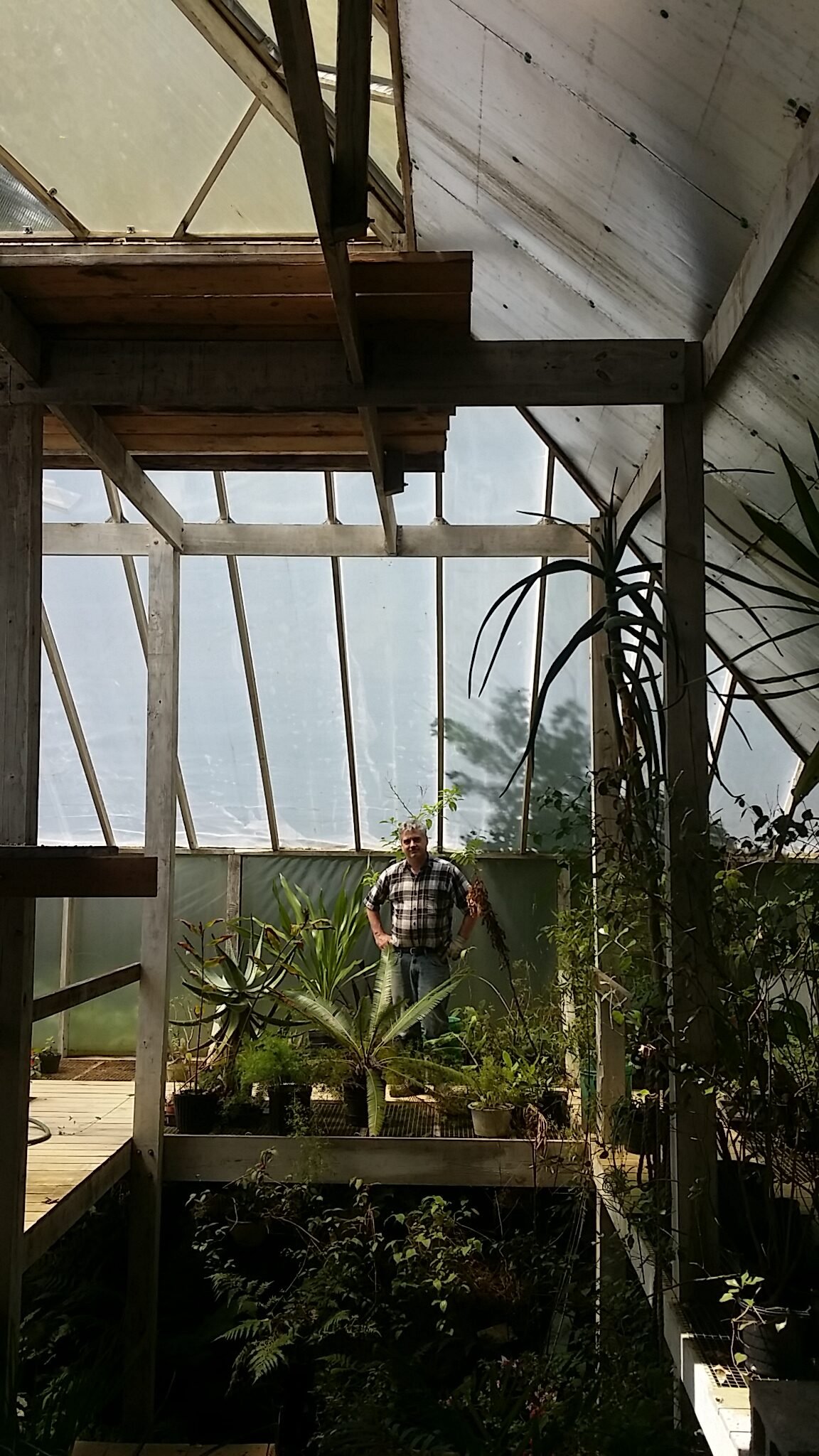
The greenhouse operated successfully from 1993 to 2023, a span of over 30 years. Here are some additional photos from within the greenhouse: